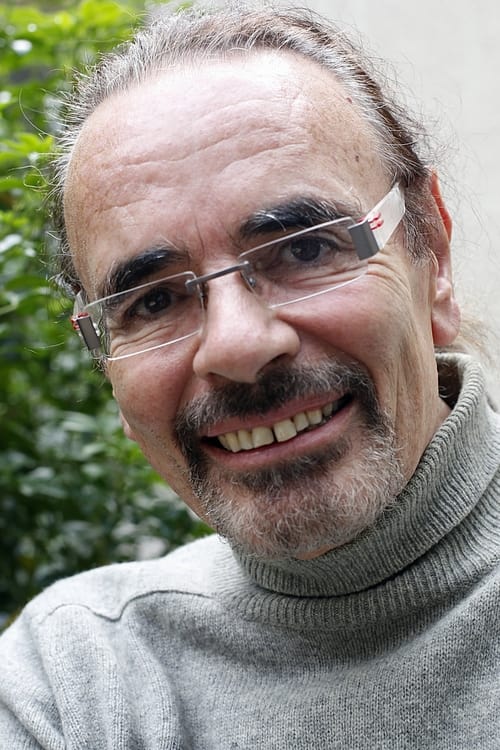
Nicolas Peyrac
Nicolas Peyrac (born 6 October 1949 in Rennes as Jean-Jacques Tazartez) is a French musician, writer and photographer. Jean-Jacques spent his youth in the small town of Saint-Brice-en-Coglès in Brittany together with his brothers and parents, both of whom were physicians. As a youngster, not partial to the advance of rock 'n' roll, he had a passion for Ferré and Brel. When his parents divorced in the early 1960s, he went to live with his mother in New York, allowing him to broaden his musical horizon and discover American music. While studying at the Lycée français, he learned to play the guitar. After returning to France to live with his father, he entered a TV talent show but was unsuccessful. Refusing to let him live the life of a "vagabond", his parents pressured him into studying medicine. During his studies he discovered a passion for photography, which brought him into contact with the music business: through a family friend he had a chance to make record sleeves for artists like Alice Dona, Hervé Vilard and Gilbert Bécaud. The latter introduced him to producer Patrick Legrand (brother of composer Michel Legrand), to whom he showed some lyrics he had written. This started his career as a songwriter, writing for artists like Marie Laforêt and Gérard Lenorman. Soon after he signed a contract with Pathé-Marconi. In 1974, Jean-Jacques, now using the stage name Nicolas Peyrac, released his first two singles, but to limited or no success. Just when he was about to lose his record deal with Pathé due to failure of success, Nicolas released the critically acclaimed 1975 song So far away from L.A., which made him an overnight star. Dropping his medical studies almost near the end (in his sixth year), he concentrated on his musical career, releasing his next hit song Et mon père ("And my father") for which he received a 'French Grammy', the prix de l’UNAC. Within a few months, he became part of the most talented musicians of his generation. Continuing the 1975 success, Nicolas released several albums, and was supporting act for stars like Serge Lama, Marie-Paule Belle et Dalida. He also regularly headlined, taking him all the way to Japan. After the death of his mother in 1978, to whom he dedicated his fifth album J't'aimais, j'ai pas changé ("I loved you, I haven't changed"), Nicolas continued touring and releasing albums, but the times of hit records seemed a thing of the past. Although writing songs for stars like Johnny Hallyday and Plácido Domingo, his own career lost ground, and by the mid-eighties he focused on different passions, writing novels and directing. At the end of the eighties, Nicolas faced a relational crisis and professional difficulties, and he fell into a severe depression, abandoning the music scene and failing to finish his novel and songs he was writing. In 1992, Nicolas' close friend and colleague Michel Berger suddenly died of a heart attack, prompting him to take control of his life again. He started writing again, helped by former colleagues and friends, and released an album less than a year later. This marked his return to the spotlights, although it took some time for him to be fully back on track. ... Source: Article "Nicolas Peyrac" from Wikipedia in English, licensed under CC-BY-SA 3.0.
Credits
Newest first Abers Roadas Self2021
 Les années bonheuras Self2006
 Vivement dimancheas Self1998
 Le monde est à vousas Self1987
 Sacrée soiréeas Self1987
- 40° à l'ombreas Self1987
 Champs-Elyséesas Self1982
 Le Chêne d'Allouvilleas Nicolas Peyrac, singer1981
 Seven Days in JanuaryOriginal Music Composer1979
 Fan Schoolas Self1977
 Numéro unas Self1975
- Numéro unas Self - Host1975
- Système 2as Self1975
 Les Rendez-vous du dimancheas Self1975
 Midi Premièreas Self1975
 Le Grand Échiquieras Self1972
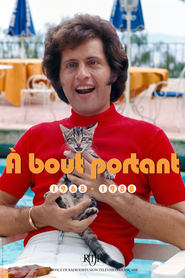 À bout portantas Self1968