Hans Cürlis
Hans Cürlis filmed Kandinsky, Grosz, Pechstein, Dix, Kollwitz, Liebermann, and Calder at work, many years before Paul Hasaert’s Visite à Picasso. Cürlis had studed with Wölflin and had written his thesis on Dürer. In 1919 he established the Institut für Kulturforschung, "the first German scientific institution which consciously selected the cinema as a form of expression through the results of its own work" (Cürlis, 1929). That he is not considering simply a form of documentation is demonstrated by the fact that among his first collaborators can be listed animation and silhouette artists such as Bartosch, Carl Koch, Lotte Reiniger, and Toni Rabold. After a film on African sculpture and a number of geographical documentaries, in 1922 he began the series Schaffende Hände: short films not "on art" so much as the physical process of the creation of a work of art turned into cinema.
Credits
Newest first- Drei Meister schneiden in HolzDirector1952
- Drei Meister schneiden in HolzWriter1952
- Der Film entdeckte Kunstwerke indianischer VorzeitDirector1951
- Der Film entdeckte Kunstwerke indianischer VorzeitWriter1951
- German Film Awardas Self1951
- Schwarz - Weiß - GelbDirector1949
- Schwarz - Weiß - GelbWriter1949
- Vitamins in the StreetDirector1946
- Fleckfieber droht!Director1946
- Bach - Mozart - BeethovenDirector1942
- Bach - Mozart - BeethovenWriter1942
- Geheimnisse der MumienDirector1934
- Geheimnisse der MumienWriter1934
- The Lower DanubeDirector1929
- Alexander CalderDirector1929
- Alceo DossenaDirector1929
- People and BooksDirector1929
- Die Weltgeschichte als KolonialgeschichteDirector1926
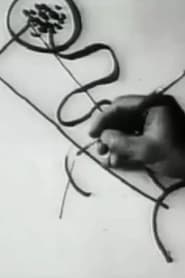 Schaffende Hände: Wassily Kandinsky in der Galerie Neumann-NierendorfDirector1926
- Schaffende Hände: Max OppenheimerDirector1924
- Schaffende Hände: George GroszDirector1923
 CinderellaProducer1922
- Schaffende Hände: Lovis CorinthDirector1922
 The Ornament of the Lovestruck HeartProducer1919