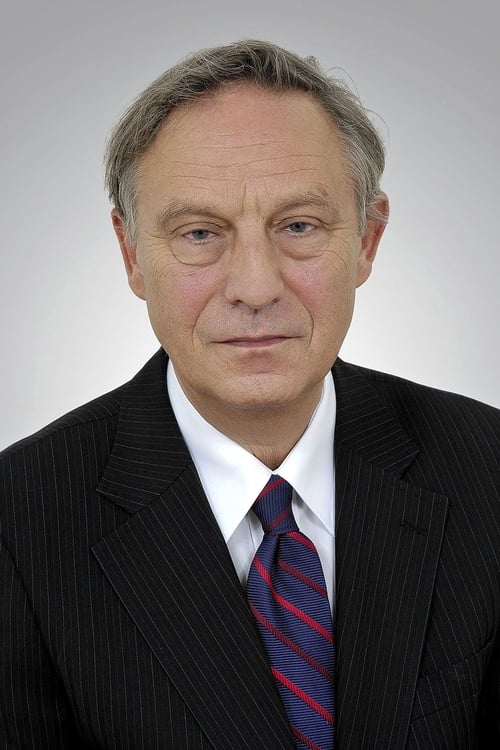
Krzysztof Piesiewicz
From Wikipedia, the free encyclopedia Krzysztof Piesiewicz (October 25, 1945 - May 14, 2026) was a Polish lawyer, screenwriter, and politician, who was a member of the Polish Parliament and head of the Ruch Społeczny (RS) or Social Movement Party. Piesiewicz studied law at Warsaw University and began practicing in 1973. Through the late 1970s he became increasingly involved in political cases, defending opponents of the Communist regime, serving as a legal advisor for Solidarity, and assisting in the successful prosecution of the murderers of Jerzy Popiełuszko. In 1982 he met the film director Krzysztof Kieślowski, who was planning to direct a documentary on political show trials in Poland under martial law. Piesiewicz agreed to help, though he doubted whether an accurate film could be made within the constraints of the judicial system; indeed, the filmmakers found that their presence in court seemed to be affecting the outcomes of cases, often improving the prospects of the accused, but making it hard to capture judicial abuses. Kieślowski decided to explore the issue through fiction instead, and the two collaborated for the first time as writers on the feature film No End, released in 1984. Piesewicz returned to his law career, but remained in touch with Kieślowski and three years later persuaded him to create a series of films based on the Ten Commandments. This series, The Decalogue, explored the filmmakers' mutual interest in moral and ethical dilemmas in contemporary social and political life, and achieved (belated) critical acclaim around the world. Their later collaborations, The Double Life of Véronique and Three Colors (Blue, White, Red), focused on metaphysical questions of personal choice and appeared relatively apolitical, though the latter series was based on Piesiewicz's idea of dramatizing the French political ideals of liberty, equality, and fraternity in the same way they had previously dramatized the Ten Commandments. Piesiewicz was credited as co-writer on all of Kieślowski's projects after No End, the last of which was Nadzieja, directed by Stanislaw Mucha after Kieślowski's death. He has begun writing a new series of films, The Stigmatised; the first of these, Silence, was directed by Michał Rosa and released in 2002. Piesiewicz's career in electoral politics began in 1989, when he began working in the Social Movement for Solidarity Electoral Action (RS AWS) party, originally the political wing of the Solidarity union and the leading party in the center-right AWS coalition. In 1991 he was elected to the Polish Senate, served for two years, then returned in 1997. In 2002, RS AWS changed its name to RS and elected Piesiewicz as its leader. He was a Roman Catholic.
Credits
Newest first Possible LoveExecutive Producer2026
 Parallel TalesExecutive Producer2026
- Parallel TalesOriginal Story2026
- Parallel TalesProducer2026
- Talking Heads 2021as Self2021
 The NewbieProducer2010
 My Poor HeadProducer2010
- The Scent of Flowers Does Not Blow Against the WindProducer2009
- OverboardProducer2009
- Janusz W. CaseProducer2009
- The LodgerProducer2009
- The FenceProducer2009
- Street FeelingProducer2009
- Yoko Ono’s CupsProducer2009
- RealProducer2009
 HopeScreenplay2007
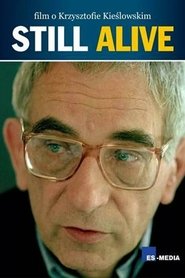 Still Alive: A Film About Krzysztof Kieslowskias Self2006
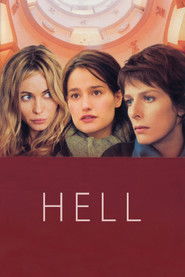 HellWriter2005
 HeavenScreenplay2002
 SilenceScreenplay2001
 Three Colors: RedScreenplay1994
 Three Colors: WhiteScreenplay1994
 Three Colors: BlueScreenplay1993
 The Double Life of VéroniqueWriter1991
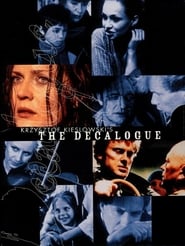 DekalogWriter1989
 Decalogue VScreenplay1989
 Decalogue VIScreenplay1989
 Decalogue IScreenplay1989
 Decalogue IIScreenplay1989
 Decalogue IIIScreenplay1989
 Decalogue IVScreenplay1989
 Decalogue VIIScreenplay1989
 Decalogue VIIIScreenplay1989
 Decalogue IXScreenplay1989
 Decalogue XScreenplay1989
 A Short Film About LoveWriter1988
 A Short Film About KillingScreenplay1988
 No EndScreenplay1985